
Let's be honest. We’re all fighting for the same elite developers, product managers, and data scientists. We offer competitive salaries, ESOPs, and a great culture. But if your health benefits package is still stuck in the last decade, you're losing the war for talent before you even know it's begun.
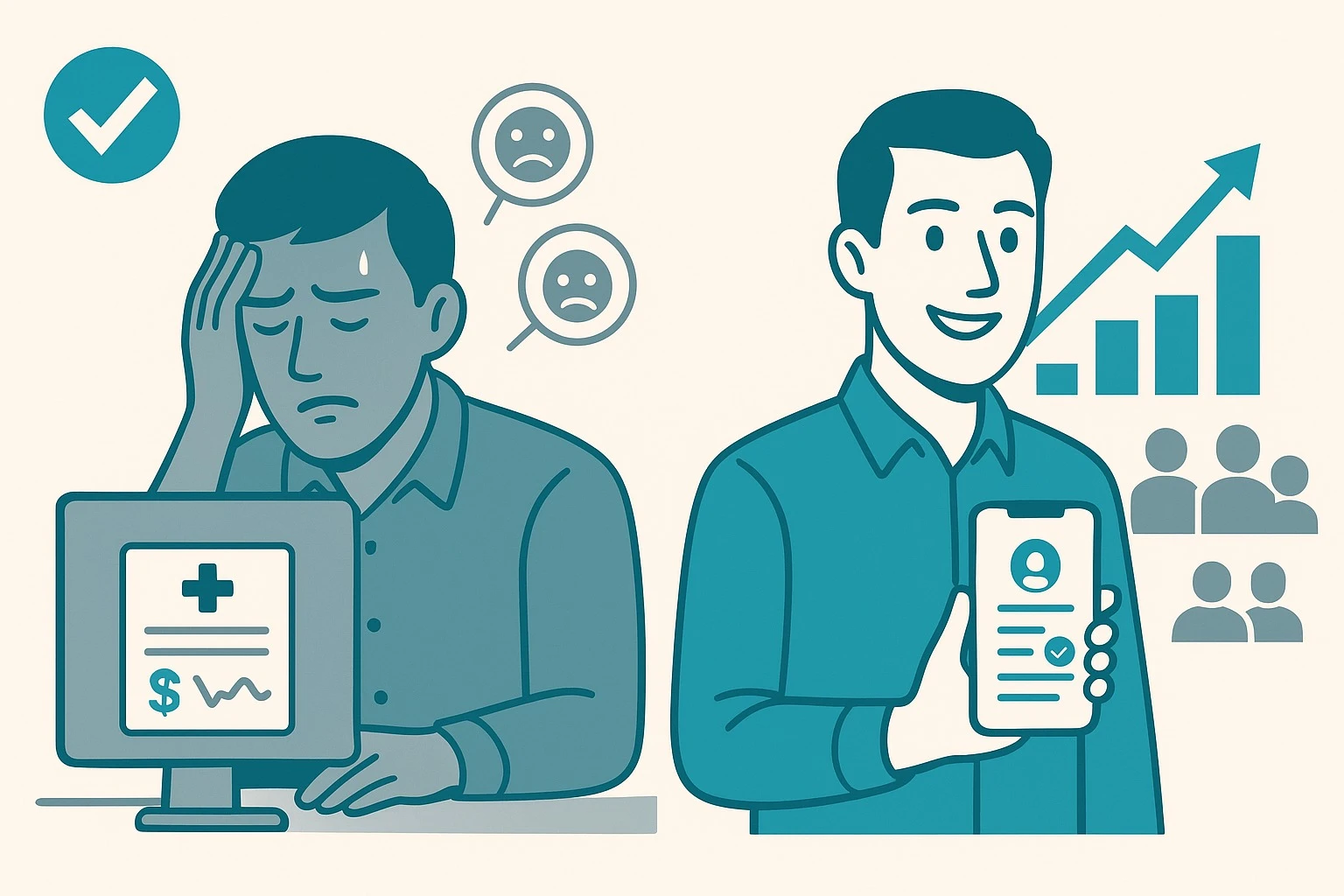
Your standard Group Medical Cover (GMC) is a safety net for a crisis. But your star engineer isn't in a crisis. She's dealing with screen-induced migraines, back pain from a WFH setup, and the rising anxiety of a high-pressure role. Her policy is silent when she needs it most.
Those everyday health issues—the ones that never require hospitalisation—are the moments that define an employee's experience. By ignoring them, you're ignoring a massive blind spot in your retention strategy. It's time to stop insuring for the 1% catastrophe and start investing in the 99% of daily wellness that drives productivity and loyalty.
Why Your Standard GMC is Failing Your Tech Talent
Think of your benefits package as a tech stack. Your GMC policy is a world-class disaster recovery plan—essential, but useless for the day-to-day performance lags and bugs that frustrate your employees.
Outpatient (OPD) benefits are your performance optimisation layer. They cover the frequent, real-world health needs: doctor visits, lab tests, pharmacy bills, and therapy sessions. Without OPD coverage, you're forcing your team to live with a buggy "user experience" that drains their financial and mental bandwidth.
The Real ROI: How OPD Benefits Impact Your KPIs
This isn't about "wellness." It's about measurable business results. When you talk to your CFO, frame the conversation around these three core metrics:
1. Slash Attrition Costs
The cost to replace a skilled developer can exceed 200% of their salary. A meaningful OPD benefit is a high-impact, high-visibility tool that directly fights attrition and shows up positively in exit interviews.
2. Win the Employer Brand War
Your Glassdoor reviews are your reputation. An announcement about cashless therapy sessions or coverage for a child's medicines is a powerful signal that you care. It’s the kind of news that top talent looks for.
3. Boost Engineering Productivity
"Presenteeism"—working while sick—kills focus and delays sprints. By removing the cost barrier to healthcare, you ensure your team is healthier and more productive. It's a direct investment in your company's output.
Demand a Modern "Operating System" for Your Benefits
For a tech company, experience is everything. Clunky, paper-based reimbursement forms are unacceptable. The only real choice is a Digital Wallet / App-Based Platform. The experience must be as seamless as using Swiggy or Uber—frictionless, cashless, and app-first is the new standard.
Your 4-Point Action Plan
This isn't just another line item. It's a strategic shift. Use this checklist to guide your internal discussions:
- Strategic Alignment: How does a proactive health benefit align with our core values of 'Employee First' and 'Innovation'?
- Competitive Benchmarking: Which of our direct talent competitors already offer this? (If you don't know, you're likely already behind.)
- Financial Modelling: What is the Total Cost of Benefit (TCB) vs. the modelled impact on attrition and hiring costs?
- Communication is Key: How do we launch this not as a policy update, but as a celebrated cultural milestone?
Top talent no longer just looks at their CTC; they evaluate their entire quality of life. OPD benefits are no longer a "nice-to-have" perk. They are a strategic imperative for any tech company serious about winning—and keeping—the best people.