
As an HR leader in the Indian tech ecosystem, you're on the front lines of a relentless talent war. You've benchmarked salaries to the 90th percentile, offered generous stock options, and yet, your top performers are still being poached. What's the missing piece of the puzzle?
Your benefits package is built on an outdated, one-size-fits-all model. It’s a blunt instrument in an era that demands surgical precision.
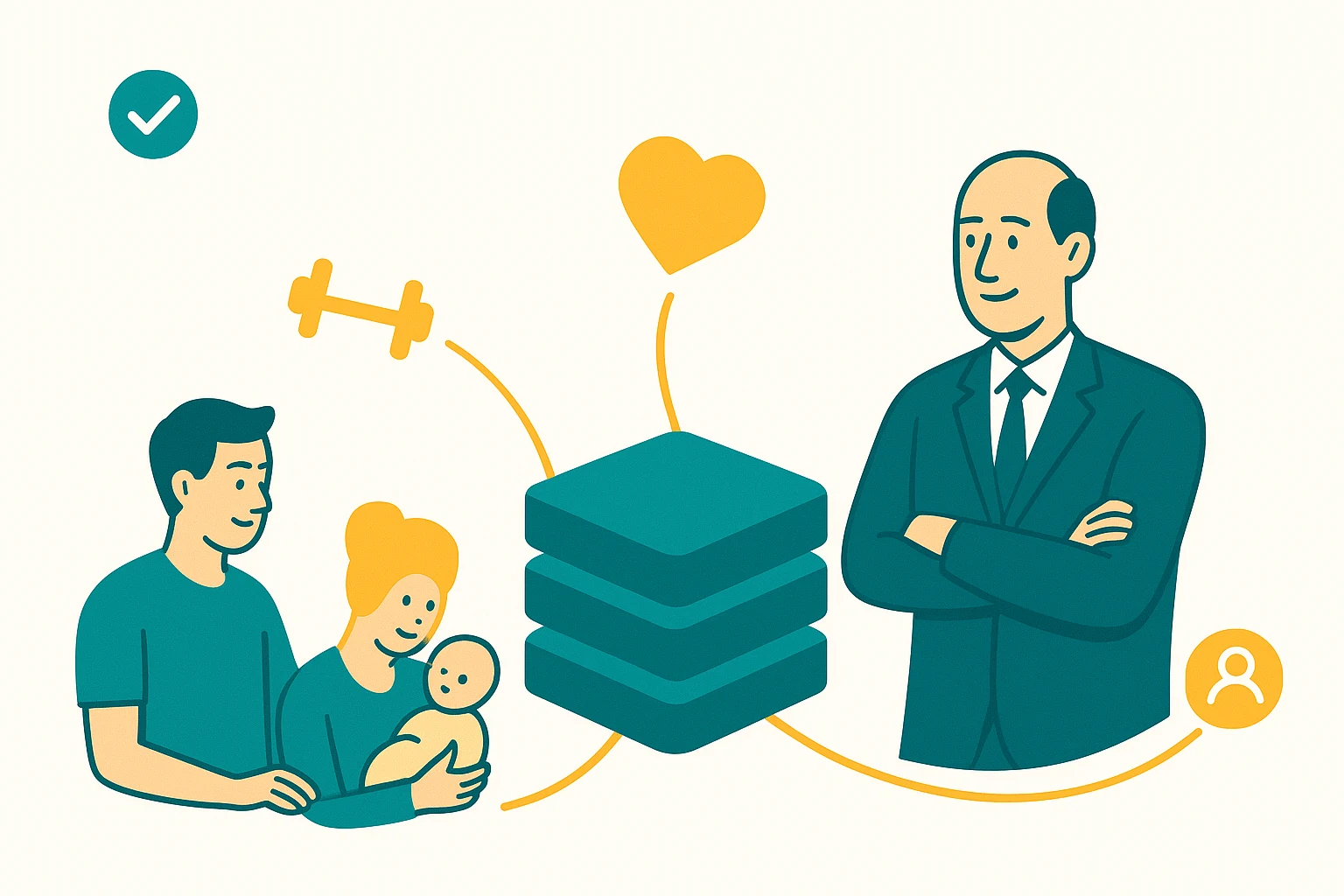
While your product teams are obsessed with user experience and personalization, your HR benefits likely treat a 24-year-old coder, a 35-year-old new mother, and a 45-year-old caring for aged parents, exactly the same. It's time to stop thinking like a traditional HR manager and start thinking like a product manager. It's time to architect an Agile Benefits Stack.
From Monolith to Microservices: Introducing the Agile Benefits Stack
The monolithic, inflexible benefits plan of the past is dead. The future is a modular, API-driven approach designed for choice, flexibility, and a world-class employee experience.
1. The Core Layer (The Non-Negotiables)
This is the bedrock of your duty of care. It’s robust, comprehensive, and mandatory for everyone.
- Best-in-Class Health Insurance: Not just a high sum insured, but wide hospital network access, seamless claims, and coverage for pre-existing conditions from day one.
- Term Life & Accident Insurance: Providing a solid financial safety net for employees' families.
- Retirement & Savings Framework: A well-structured Provident Fund (PF) and guidance on the National Pension System (NPS).
2. The Flexi-Wallet (The API Layer)
This is where the magic happens. On top of the core, you allocate a generous annual "Flexi-Wallet" of credits. Employees "spend" these credits on what matters most *to them*, plugging into a curated marketplace of benefits.
For the Young Achiever
- 💻 Upskilling & Certifications
- 🏋️ Premium Gym Subscriptions
- ✈️ Vacation & Travel Allowances
For the Growing Family
- 👶 Enhanced Maternity/Paternity
- 🍼 Childcare Reimbursements
- 🩺 OPD & Preventive Health
For the Seasoned Professional
- 👴 Elder Care Support
- 📈 Financial Planning Advisory
- 🧠 Executive Coaching
This isn't just a menu; it's a statement. It tells your employees, "We see you. We understand your unique life stage and we trust you to choose what's best for you."
The CFO Conversation: From Cost Center to Strategic Investment
Your first and most critical hurdle will be the CFO. They'll see "Flexi-Wallet" and think "uncontrolled costs." You must be prepared to reframe the conversation from expense to strategic, tax-efficient investment.
- Lead with Cost-Neutrality: This isn't about a bigger budget; it's about a *smarter* budget. A Flexi-Wallet can be designed to be cost-neutral by reallocating your existing spend from underutilized benefits.
- Highlight Tax Efficiency (The FBP Advantage): This is your trump card. Structure the Flexi-Wallet within the Flexible Benefit Plan (FBP) framework. This makes their CTC more attractive and increases their take-home pay *without increasing your cost-to-company*.
- Model the ROI: Present a clear business case. A simple model is powerful:
(Cost of Attrition * % Reduction) > (Platform Cost + Incremental Spend)
The Hard ROI of Radical Flexibility
Moving to a hyper-personalized model isn't just a "feel-good" initiative. It's a strategic weapon with a measurable impact on your company's bottom line.
- A Magnet for Elite Talent: In a sea of similar salary offers, your benefits stack becomes your key differentiator. While you're still debating basic OPD coverage, your biggest competitor just announced a fertility benefits package, instantly making them a top destination for young professionals.
- Slashed Attrition & Skyrocketing Retention: A MetLife study found that 73% of employees said a wider range of benefits would make them more loyal. For tech companies, where replacing a skilled developer can cost 1.5-2x their annual salary, this translates into massive savings.
- Boosted Productivity & Innovation: By offering benefits that solve real-life problems—mental health support, financial wellness coaching, elder care services—you free up your employees' cognitive bandwidth. This directly translates into more focused, innovative, and productive work.
The CHRO's Playbook for Implementation
Transitioning to an agile benefits model requires a strategic, phased approach.
Phase 1: The Diagnosis (Data, Not Guesswork)
Analyze current benefits usage data. Develop rich "personas" of your workforce. Ask direct questions: "If you had ₹50,000 to spend on your well-being, what would you spend it on?"
Phase 2: Design Your MVP (Minimum Viable Plan)
You don't have to launch everything at once. Start with a robust Core Layer and a Flexi-Wallet with 5-7 high-demand options. Pilot the program with a specific department, gather feedback, and iterate.
Phase 3 & 4: Choose Your 'OS' & Go-To-Market
Invest in a seamless, intuitive benefits technology platform. Then, market your new program internally like a flagship product launch with a multi-channel communication campaign.
Beyond Flex: The Future is Predictive and Automated
To truly lead the market, look beyond just offering choices. The next frontier is using technology to create a dynamic and proactive benefits experience. Imagine your HRMS platform automatically prompting an employee about relevant benefits based on life events. That's the future—moving from reactive choice to proactive, data-driven care.